
A Hybrid Photoplethysmography (PPG) Sensor System Design for Heart Rate Monitoring
ACTIVITIES
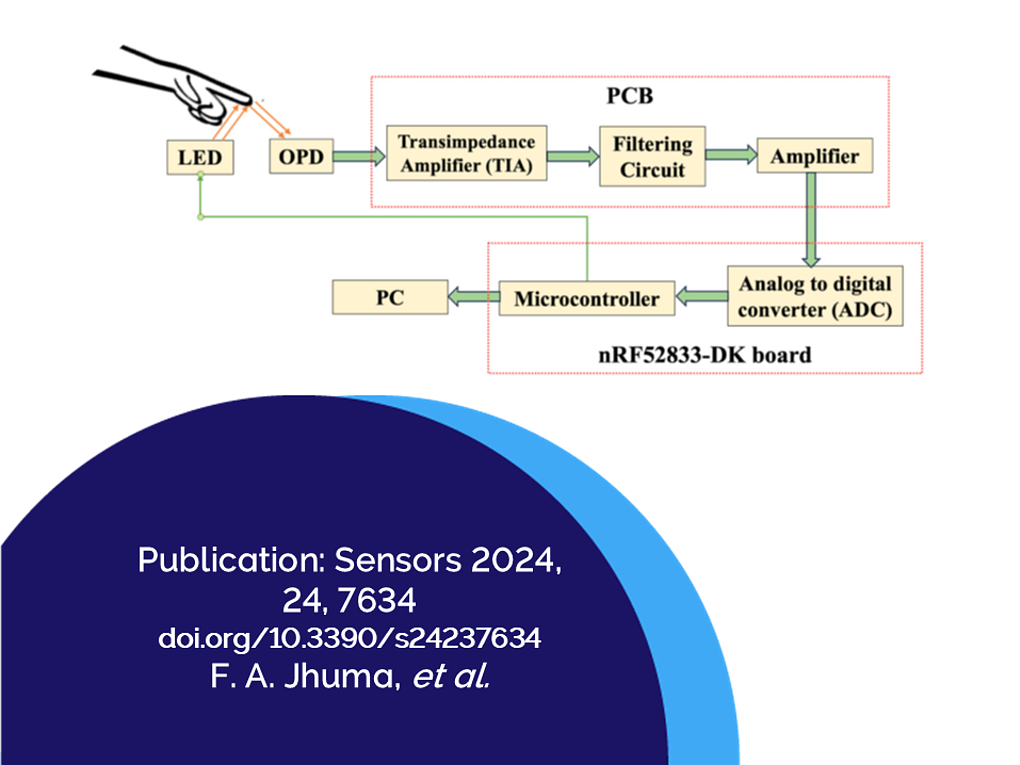
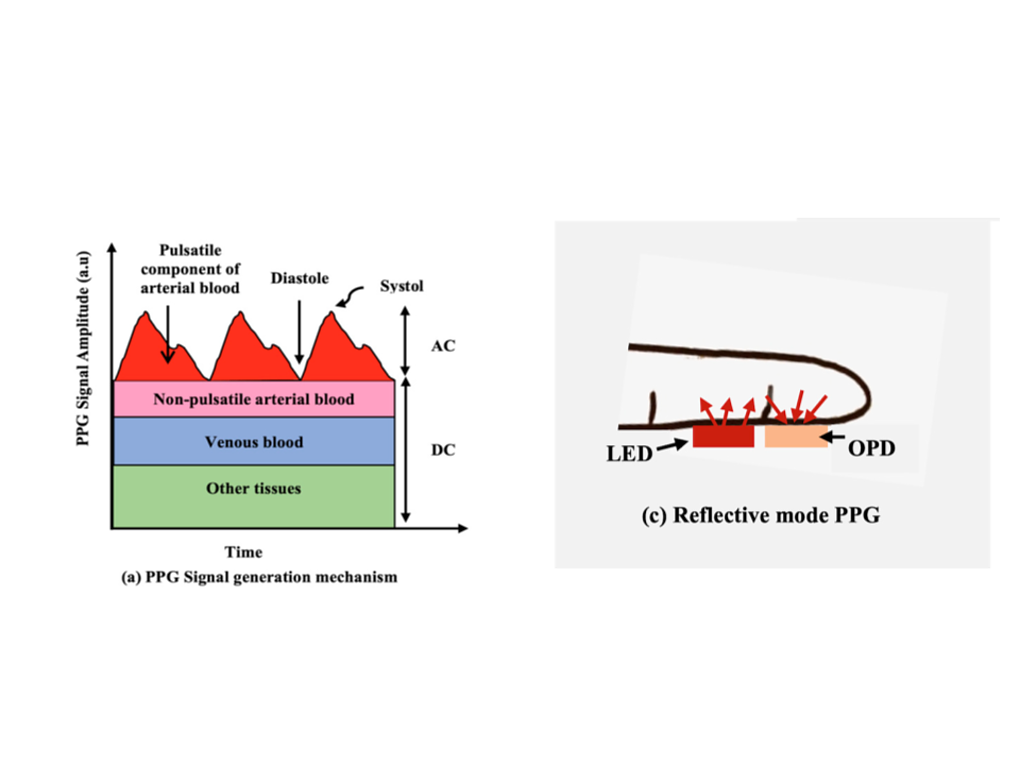
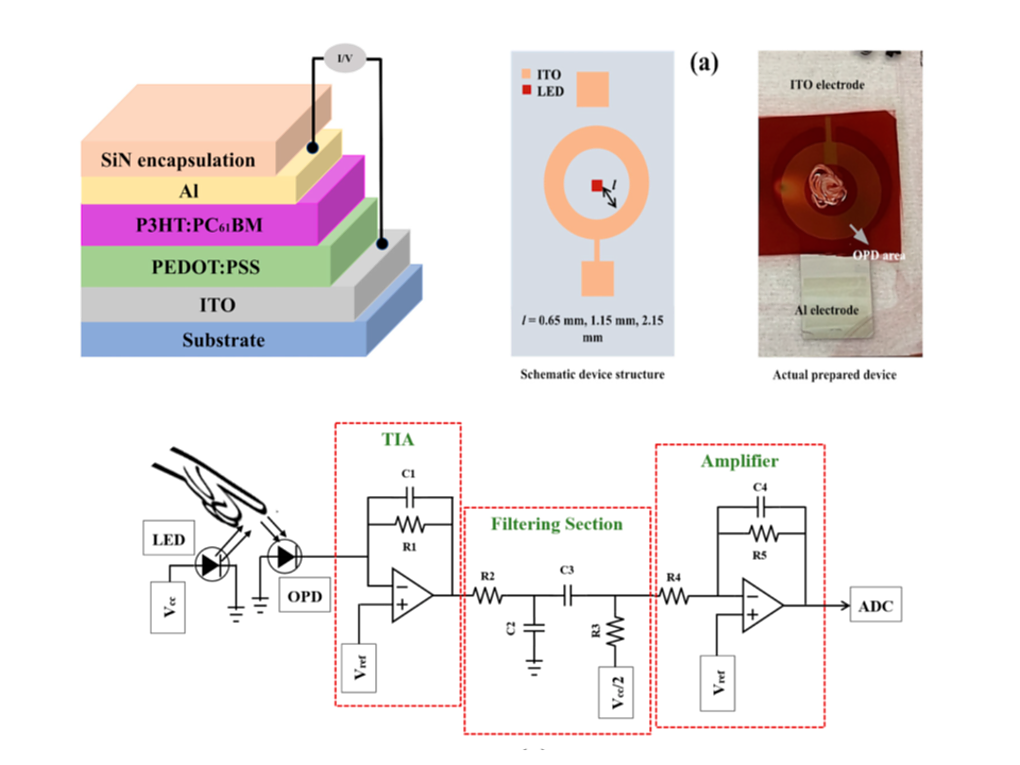
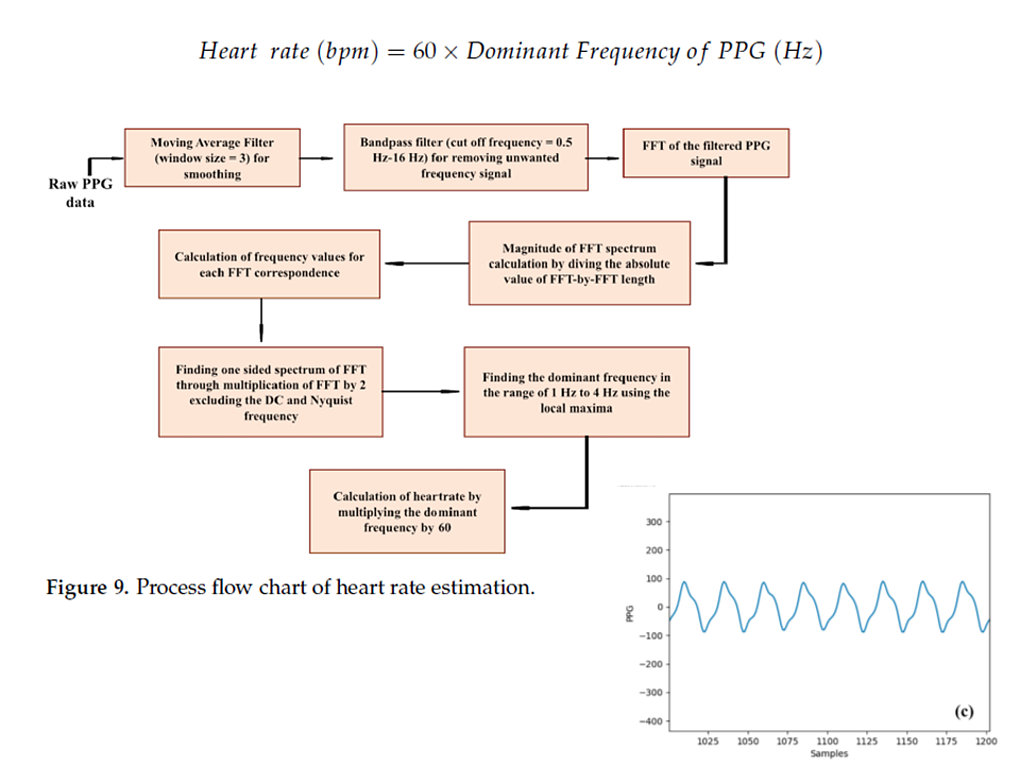
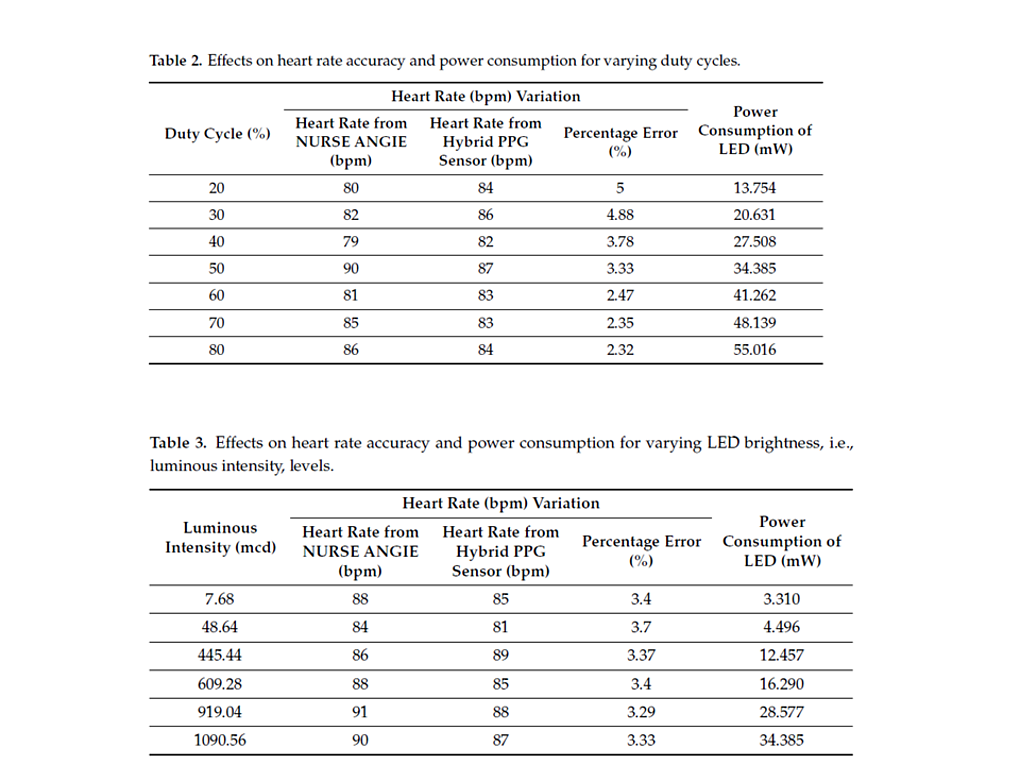
A photoplethysmography (PPG) sensor is a cost-effective and efficacious way of measuring health conditions such as heart rate, oxygen saturation, and respiration rate. In this work, we present a hybrid PPG sensor system working in a reflective mode with an optoelectronic module, i.e., the combination of an inorganic light-emitting diode (LED) and a circular-shaped organic photodetector (OPD) surrounding the LED for efficient light harvest followed by the proper driving circuit for accurate PPG signal acquisition.
The system has an optoelectronic device module containing an OPD as the light detector and an LED as the light emitter mounted on a customized printed circuit board (PCB). As the light detector module, a polymeric bulk heterojunction OPD was adopted for the detection of visible light.
A high LED duty cycle resulted in a more accurate heart rate. Still, it required more power, which led to maintaining a 50% duty cycle in this work to provide a balanced relation between the heart rate accuracy and the power consumption. The study of various LED brightness levels indicated that an accurate heart rate measurement is possible with lower LED luminous intensities, i.e., with low power consumption, leading to an improvement in the battery lifetime of the sensor. This study demonstrated that the hybrid PPG sensor, incorporating an optimized OPD structure, is a promising solution for low-power heart rate monitoring. By leveraging a controlled LED duty cycle and luminous intensity, the sensor achieves efficient PPG signal acquisition.
-
ACTIVITIES
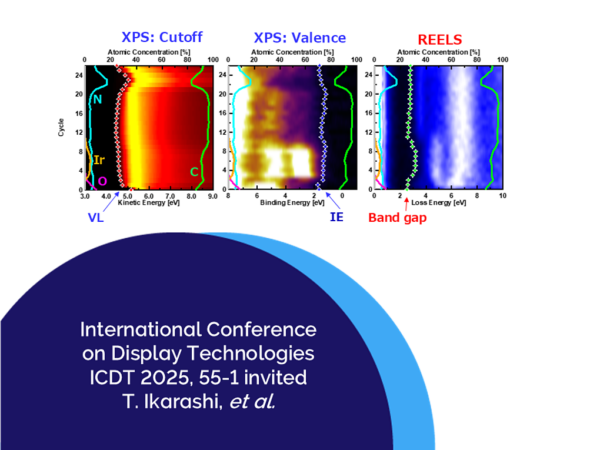
Study on Intrinsic and Extrinsic OLED Degradation by Utilizing μ-PL with Gradient Shaping Preparation and GCIB-XPS/REELS
Mar 25, 2025
-

ACTIVITIES
Analysis of TADF-OLED Degradation by GCIB-TOF-SIMS and Study of Water Impact with In Situ Exposure Methodology
Apr 4, 2024
-
ACTIVITIES
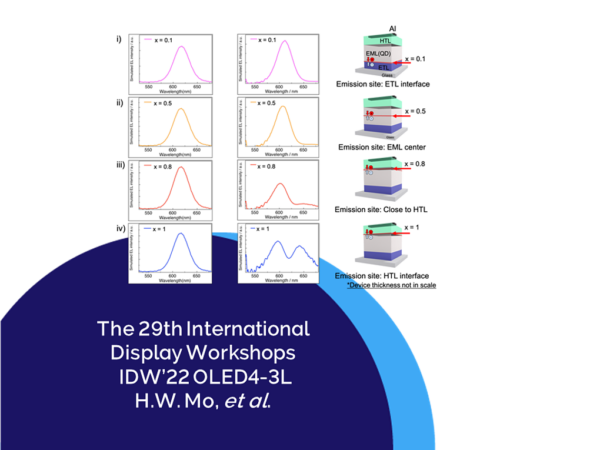
Analysis of Emission Zone Profile in an Organic–Quantum Dots Hybrid Device
Dec 16, 2022
-

ACTIVITIES
Analysis of TADF-OLED degradation induced by extrinsic impurities
Jul 19, 2022
-
ACTIVITIES
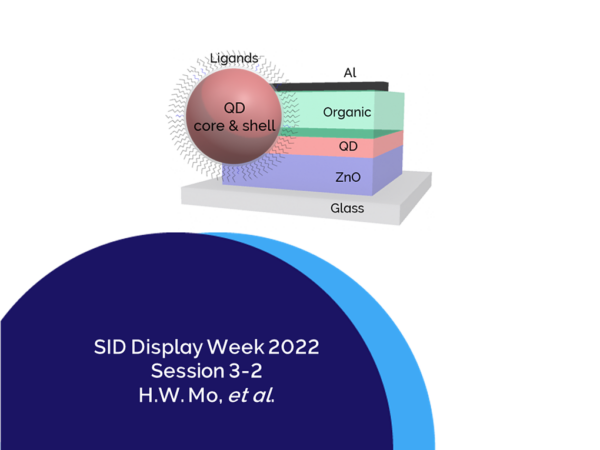
Analyzing the Degradation Process of Quantum-Dot LEDs (QLEDs) by Mass Spectrometry
May 10, 2022
-
ACTIVITIES
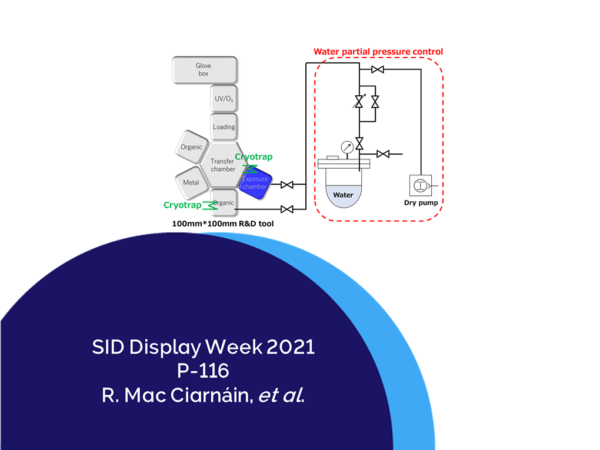
TADF OLED Emission Zone and Stability Analysis with Water Exposure to Different Layers during Deposition
May 21, 2021